What Collects Inside a Houston Home's Ducts, Stop by Stop
Dust doesn't settle evenly in a duct system, and knowing where each kind lands explains what a real cleaning has to reach.
October 27, 2026 · 4 min read
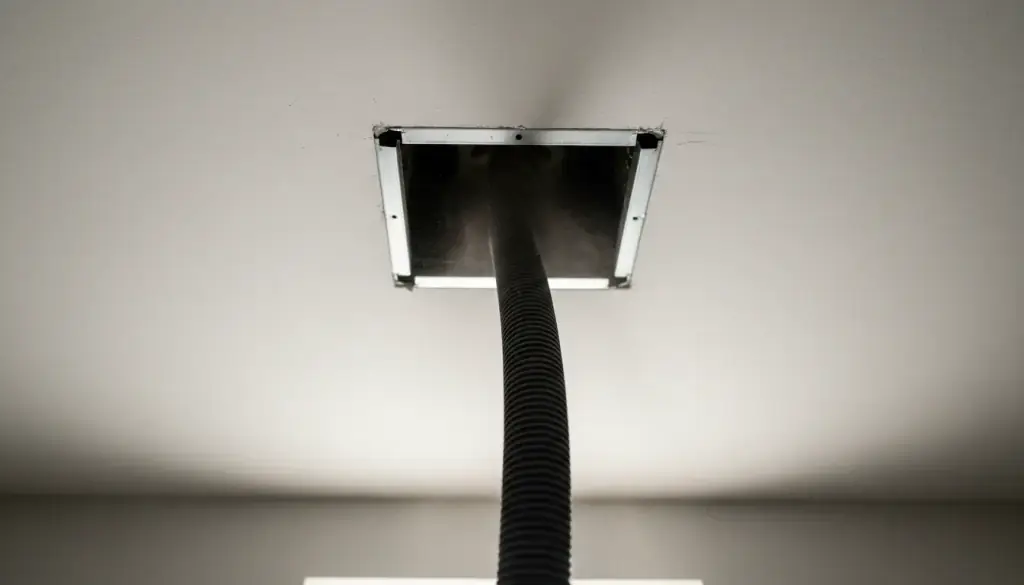
Most homeowners picture a duct as a tube with some dust in it. The reality is a path with distinct stops, and each stop collects something different. Knowing the order helps you understand what a cleaning visit actually covers, and why wiping a vent cover isn't the same job as cleaning the system behind it.
The register in the ceiling or floor
The register is the part you can see, and it's the first place the signs show up. Dust settles along the louvers and on the inside edge of the boot, the metal collar that joins the register to the duct behind it. Pet hair, lint and the fine grit that rides in on shoes tend to gather here because the air slows down as it spills into the room. A damp cloth takes care of the face of the register. It won't touch anything behind it.
Some rooms pick up a sticky film as well, usually where cooking or a humid bathroom puts moisture in the air. Dust clings to that film instead of drifting past, so the buildup is heavier than you'd guess from a vent that only looks a little dirty.
The branch runs between the rooms and the trunk
Behind each register is a branch, usually flexible duct in the attic or a stretch of sheet metal in a wall or soffit. Flex duct has a ribbed inner liner, and those ribs work like small shelves. Dust drops onto them every time the blower shuts off and the air goes still. After many cooling seasons the shelves fill in. Long branches with several bends hold the most, because every bend is a place where moving air loses speed and lets go of what it's carrying.
A branch can also sag between supports. Where it droops, debris pools in the low spot like silt in a creek bed. That's one reason a good cleaning isn't only a vacuum job. It also involves looking at how the duct is hung, and sagging ducts get their own write-up on this blog.
The attic trunk
Where the branches join, you'll usually find a larger trunk line, the main artery that carries air from the air handler out to everything else. In many Houston homes it runs through the attic, where summer heat bakes the surface and insulation fibers drift around. The trunk collects the finer dust the branches let through. It also collects loose insulation if a seam or connection isn't tight, because any gap pulls attic air in whenever the system runs. That's how fiberglass bits and attic dust end up inside a duct that was supposed to carry only house air.
The plenum and the coil
The plenum is the sheet-metal box on the air handler where the trunk connects. Right beside it sits the evaporator coil, the cold set of fins that pulls moisture out of the air during cooling. This stop matters more than any other in a humid city. A coil is wet through much of the cooling season, and wet surfaces plus dust make a slimy film, and sometimes mold.
Houston Air Duct Cleaning's own description of the problem names the coil and the filters as places mold can grow, so that's where a careful visit looks. A dirty coil also does something simple and annoying. It blocks airflow across the fins, so the system moves less air for the same effort. You might notice weak flow in the far rooms or a system that runs longer than it used to. Those are common symptoms, not proof, but they're worth a look.
The return and the filter
Air has to get back to the air handler, and it comes in through the return grille. That's usually one big grille in a hallway or a wall, sometimes a smaller one in each room. The return tends to be the dirtiest stop, because it's where the house's own dust enters the system. The filter is supposed to catch it. A filter that's loaded, or the wrong size, lets the rest slip around its edges and coat the return duct and the blower wheel.
Check yours. If you pull the filter and it's grey and matted, the return duct behind it may have collected a layer of its own.
What this means for a cleaning visit
A thorough cleaning follows the same path the air does. Here's a quick map of what collects where:
- Register and boot: lint, pet hair, grit, and a sticky film in humid rooms.
- Branch runs: dust on the ribbed liner, and debris pooled in sags.
- Attic trunk: fine dust and loose insulation fibers drawn in through gaps.
- Plenum and coil: moisture, slime and sometimes mold.
- Return and filter: the house's dust, plus whatever gets past a poor filter.
Skip a stop and its dust gets blown back through the stops you paid to clean. That's the practical reason to ask what a visit covers before you book.
Houston Air Duct Cleaning offers a 100% free estimate, and you can call (281) 715-0597 any day between 8 AM and 11 PM. Tell them which room looks worst. That gives you a place to start the conversation.
Houston Air Duct Cleaning, (281) 715-0597
Call (281) 715-0597More articles
Mold in Air Ducts: Where It Grows and What Removal Involves
Mold in ductwork needs moisture, dust and time, and Houston's humidity supplies the first of those for most of the year.
A UV Light in Your Air Handler: What It Does and Doesn't Do
A UV lamp does one narrow job at the coil, and it works best after a cleaning has cleared the surfaces it shines on.